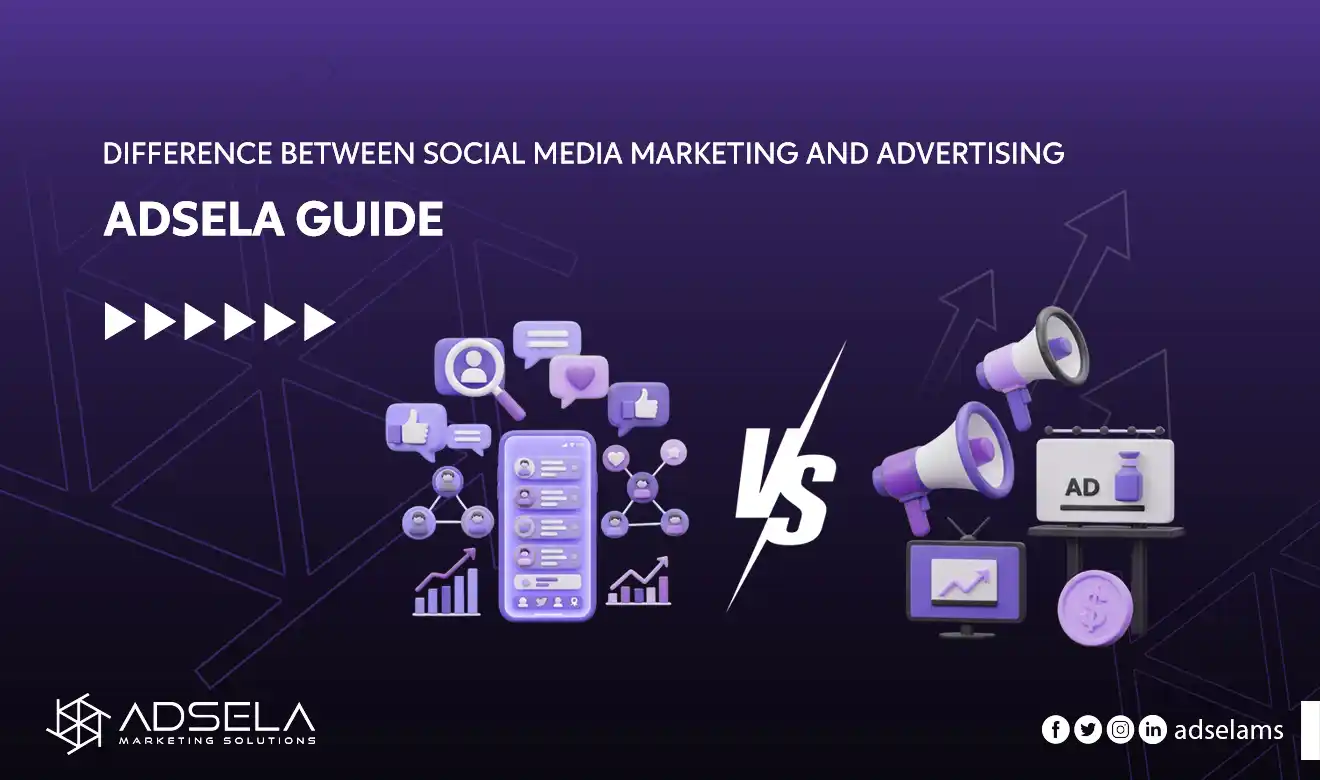
difference between social media marketing and advertising lies in their goals, strategies, and execution. Although both apply social platforms to find audiences, social media marketing is oriented to organic interaction, brand recognition and long-term relations due to regular interaction with the community and content. Social media advertising, in contrast, is powered by paid campaigns that are intended to generate easy-to-measure results (conversions, clicks, or sales), fast. Knowing this difference will assist companies in creating more balanced and efficient digital strategies.
What is social media marketing?
Social media marketing refers to the strategic exploitation of social media (Facebook, Instagram, LinkedIn, YouTube) to advertise the products or services of a company, as well as communicate with its audience, create brand recognition and traffic.
What is online advertising?
Online advertising can be defined as advertising using internet and it means that the promotional message gets to the consumer via different internet resources, including search engines, websites, social media, and mobile applications. It encompasses such formats as display advertisements, video advertisements, paid search (PPC), and sponsored social postings. Increasing visibility and hitting targeted audiences at high speed is the main aim of online advertising, as well as generating quantifiable outcomes in the form of clicks, leads, or sales.
Key differences between social media marketing and advertising
Understanding the difference between social media marketing and advertising is essential for any business looking to make the most of social platforms. Although both of them implement social media, they differ in principle, objectives, cost distribution, and metrics. To clarify the difference between social media marketing and advertising, the following table highlights the key areas of distinction.
Which strategy delivers better engagement?
When comparing the difference between social media marketing and advertising, social media marketing generally delivers better engagement in the long run. This is in the sense that it is aimed at creating real relationships using organic content, conversations and community engagement. When the posts are natural and valuable, users are more likely to interact with it than with the paid advertisements.
Conversely, social media advertising is likely to increase engagement in a very short period with paid reach, yet the interaction is usually temporary and campaign-discounted. The best digital strategies are a combination of the two, through the use of social media marketing to gain trust and connection, and advertising to gain visibility and conversions.
How budget allocation varies between both methods
When analyzing the difference between social media marketing and advertising, one of the most significant distinctions lies in budget allocation.
The direct financial investment needed to conduct social media marketing is usually less, because most marketing strategies that can be applied are organic in nature, such as content creation, community management, and engaging with the audience. The primary expenses are the cost of hiring social media managers, graphic designers, or content creators than the platform itself. In the long run, this strategy creates brand loyalty in a long-term effort that is not at the expense of spending.
Comparatively, the use of social media advertising requires a specific and continuous budget, as each campaign presupposes paid placements on such platforms as Facebook Ads, Instagram Ads, or LinkedIn Ads. Companies are charged by impressions, clicks, or conversions and their winning can sometimes be determined by the magnitude and maximization of their advertisement budgets. Advertising is quicker in showing returns and generally has a greater short term expenditure to remain competitive.
Can marketing and advertising work together?
Yes — marketing and advertising can absolutely work together, and combining both is often the most effective digital strategy. While the difference between social media marketing and advertising lies in how they engage audiences and spend budgets, their goals ultimately align: increasing visibility, trust, and conversions.
Social media marketing builds long-term relationships and organic brand presence through authentic posts and community engagement. Meanwhile, social media advertising amplifies that reach through paid campaigns, ensuring that high-performing marketing content reaches a larger, more targeted audience.
When used together, marketing provides the foundation of trust and storytelling, while advertising accelerates exposure and results — creating a balanced, full-funnel approach that drives both engagement and sales.
Examples from successful brand campaigns
Many real-world campaigns clearly show how both social media marketing and advertising can work hand in hand to create powerful results. Successful brands often start by building authentic connections with their audience through engaging social media content, and then amplify those efforts using paid advertising to reach wider, targeted groups.
These campaigns usually combine creative storytelling, strong visual identity, and clear calls to action — proving that the difference between social media marketing and advertising doesn’t have to be a gap, but rather a strategic balance. When organic engagement meets paid exposure, brands achieve both trust and measurable growth.
Boost both strategies with Adsela’s digital experts
Maximize the power of your online presence by combining both social media marketing and advertising under one expert team. At Adsela, our digital specialists know how to balance organic engagement with high-performing paid campaigns — helping your brand reach the right audience, drive conversions, and grow faster.
Contact us today and let’s find the best solution for your brand: Get in Touch with Adsela